The Scalp Microbiome — What a Decade of Research Has Actually Settled
Your scalp hosts a community of bacteria and fungi that, when balanced, keeps itch, oil, and inflammation in check. A decade of peer-reviewed research has clarified which microbes matter, what damages them, and what scalp care actually means at the biological level.
What is the scalp microbiome?
The scalp microbiome is the ecosystem of microorganisms — primarily bacteria and fungi — that live on the surface of your scalp and inside hair follicles. It is not a passive layer of dirt. It is a dynamic, self-regulating community that interacts with your sebaceous glands, your immune system, and the structural integrity of each follicle.
The two most studied groups are:
**Cutibacterium acnes** — a bacterium that breaks down sebum into free fatty acids, helping maintain the scalp's slightly acidic pH (around 4.5–5.5).
**Malassezia species** — a genus of fungi that feeds on sebum triglycerides. At least 14 species have been identified, but *M. globosa*, *M. restricta*, and *M. furfur* are the most common on the human scalp (Byrd et al., 2018).
In a balanced state, these organisms coexist without causing symptoms. When the balance shifts — a state researchers call **dysbiosis** — the downstream effects are familiar to anyone who has dealt with an itchy, oily, or flaky scalp.
Why does it matter?
Because the microbiome directly governs three things you can feel and see every day:
**Oil regulation.** Your sebaceous glands produce sebum at a rate determined by genetics, hormones, and environment. But how that sebum *behaves* on your scalp — whether it spreads evenly, oxidises into irritants, or gets broken down by bacteria into soothing free fatty acids — is largely a microbiome question. A 2020 review in *Microorganisms* found that individuals with seborrheic dermatitis consistently showed reduced microbial diversity and an overrepresentation of *Malassezia restricta* relative to *Cutibacterium* species (Park et al., 2020). It's not how much oil you produce, but which microbes are processing it.
**Inflammation and itch.** When Malassezia overgrows, it releases oleic acid by breaking down sebum triglycerides. In roughly 50% of the population, oleic acid penetrates the stratum corneum and triggers an inflammatory response — redness, itching, and accelerated skin-cell turnover that shows up as visible flakes (Zisova, 2009). The other 50% don't react the same way, which is why two people with identical Malassezia counts can have completely different symptoms. This is a host-sensitivity issue, not purely a microbial one.
**Follicle environment.** The hair follicle is an immunologically active structure surrounded by sebaceous glands, nerve endings, and a local microbiome. Research published in *Nature Communications* (2019) demonstrated that the follicular microbiome differs measurably from the surface microbiome, and that follicular dysbiosis correlates with conditions like folliculitis. This does not mean the microbiome *causes* hair loss. It means the follicle's local environment is one modifiable variable — and it is the variable that topical scalp care can most directly influence.
What damages the scalp microbiome?
The research points to four primary disruptors:
**Over-washing with sulfate-based shampoos.** Sulfate surfactants (SLS, SLES) are effective at stripping the lipid film that the microbiome depends on. A 2017 study in *Annals of Dermatology* showed that subjects who switched to a mild, amino-acid-based cleanser showed measurable improvements in scalp barrier function within two weeks, with no change in sebum production rate. You don't need to produce less oil — you need to stop stripping the environment that keeps oil processing in balance.
**Antibacterial shampoos used long-term.** Zinc pyrithione, selenium sulfide, and ketoconazole are effective anti-fungal agents for acute flare-ups. But long-term daily use reduces overall microbial diversity, which the literature consistently associates with poorer scalp health. Use targeted treatments during flare-ups, then transition to a maintenance routine that supports microbial diversity.
**Product residue and occlusion.** Heavy styling products and silicones create an occlusive layer that alters the local anaerobic/aerobic balance, favouring one microbial group over another.
**Stress, diet, and hormones.** A 2021 study in the *Journal of Investigative Dermatology* found that psychological stress significantly altered the cutaneous microbiome within 48 hours. Cortisol elevation, high-glycaemic diets, and hormonal fluctuations all alter sebum composition — upstream factors that topical care alone cannot fully address.
What does "scalp care" actually mean?
A rational scalp-care routine has one job: maintain the conditions under which a diverse microbiome can self-regulate.
**1. Cleanse gently, not aggressively.** Use a mild, sulfate-free cleanser. Frequency should be determined by your own sebum production rate — there is no universal "wash every X days" rule.
**2. Support the acid mantle.** The scalp's optimal pH is 4.5–5.5. Products within this range support *Cutibacterium* activity and suppress *Malassezia* overgrowth. Products above pH 6.0 do the reverse.
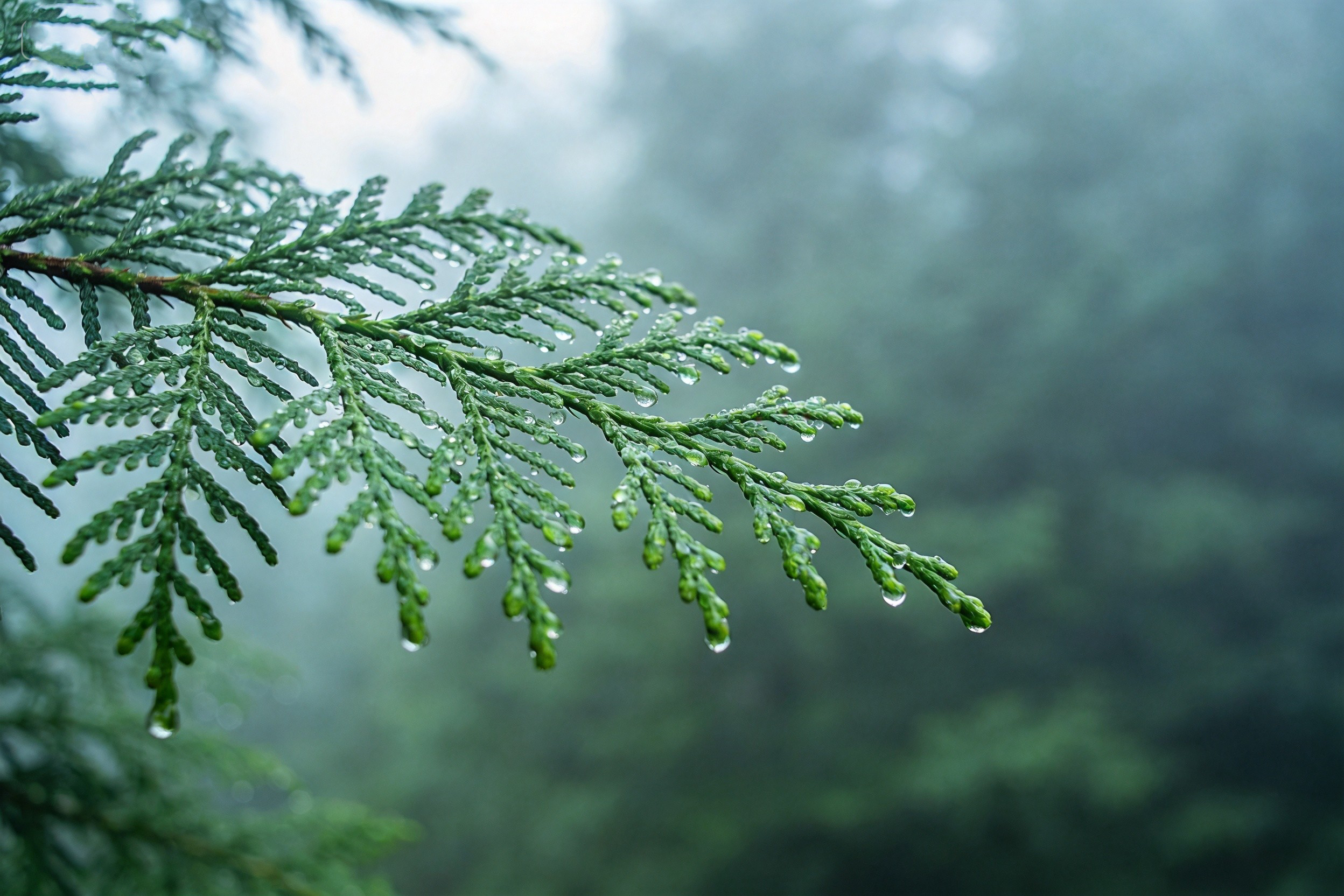
**3. Add actives that address the local environment.** Adenosine (0.75%) has been shown to support dermal papilla cell signalling. Platycladus orientalis leaf extract has demonstrated microcirculatory and anti-inflammatory effects. These are scalp-environment ingredients — not "hair growth" ingredients, and the distinction matters.
What the literature has not settled
We believe in stating the limits of what is known:
**Probiotic scalp treatments** — no topical probiotic has yet demonstrated consistent, reproducible colonisation of the scalp. The concept is promising; the products on the market are premature.
**Microbiome testing** — scalp swab sequencing is commercially available but has not been validated as a tool for guiding individual treatment. The inter-individual variability is so high that a single swab tells you less than it appears to.
**Dysbiosis and hair loss** — the link remains correlational, not causal. Dysbiosis is present in most hair-loss conditions, but whether it is a cause, a consequence, or a parallel phenomenon has not been determined.
We will update this article when new data changes these conclusions.
How long does it take to restore a disrupted scalp microbiome?
In most cases, switching to a gentle, pH-balanced cleansing routine produces measurable changes in scalp barrier function within 2 weeks. Full microbial rebalancing may take 4–8 weeks. There is no overnight fix.
Can I use oils on my scalp without making things worse?
It depends on the oil and the microbiome state. Light, non-occlusive oils (squalane) are generally well-tolerated. Heavy occlusive oils (castor oil, coconut oil) can create an anaerobic environment that favours Cutibacterium overgrowth.
Is "scalp detox" a real thing?
No. The scalp does not accumulate toxins that need to be periodically flushed. What people experience as a 'detox' effect is usually the result of removing product buildup or switching to a lower-pH shampoo — legitimate improvements, but neither involves detoxification.
Should I exfoliate my scalp?
Gentle chemical exfoliation (salicylic acid at 1–2%) can help remove accumulated keratinocytes and sebum plugs. Physical scrubs are unnecessary and can cause micro-abrasions. If you have active redness, do not exfoliate.
Does diet affect the scalp microbiome?
Indirectly, yes. High-glycaemic diets increase sebum production. Omega-3 fatty acid intake supports the lipid barrier. These are modest effects, but they compound over time alongside a good topical routine.
- Byrd AL, Belkaid Y, Segre JA. The human skin microbiome. Nat Rev Microbiol. 2018;16(3):143-155.
- Park CO, Fu X, Tintle SJ, et al. Pathogenesis of seborrheic dermatitis: the role of Malassezia and the host immune response. Microorganisms. 2020;8(9):1295.
- Zisova L. Seborrheic dermatitis — a non-eczematous, relapsing, chronic papulosquamous dermatosis. J Eur Acad Dermatol Venereol. 2009;23(7):755-756.
- Cheval J, Mahé EA, Loussouarn G, et al. Diversity and spatial distribution of the human scalp microbiota. Nat Commun. 2019;10:3763.
- Salem I, Ramser J, Isham N, Ghannoum MA. The Gut Microbiome as a Major Regulator of the Gut-Skin Axis. Front Microbiol. 2021;12:714529.
- Lodén M. The clinical effect of shampoo on dandruff and the scalp. Ann Dermatol. 2017;29(3):257-265.
This article is for educational purposes and is not a substitute for dermatological consultation. Last updated: July 2026.